

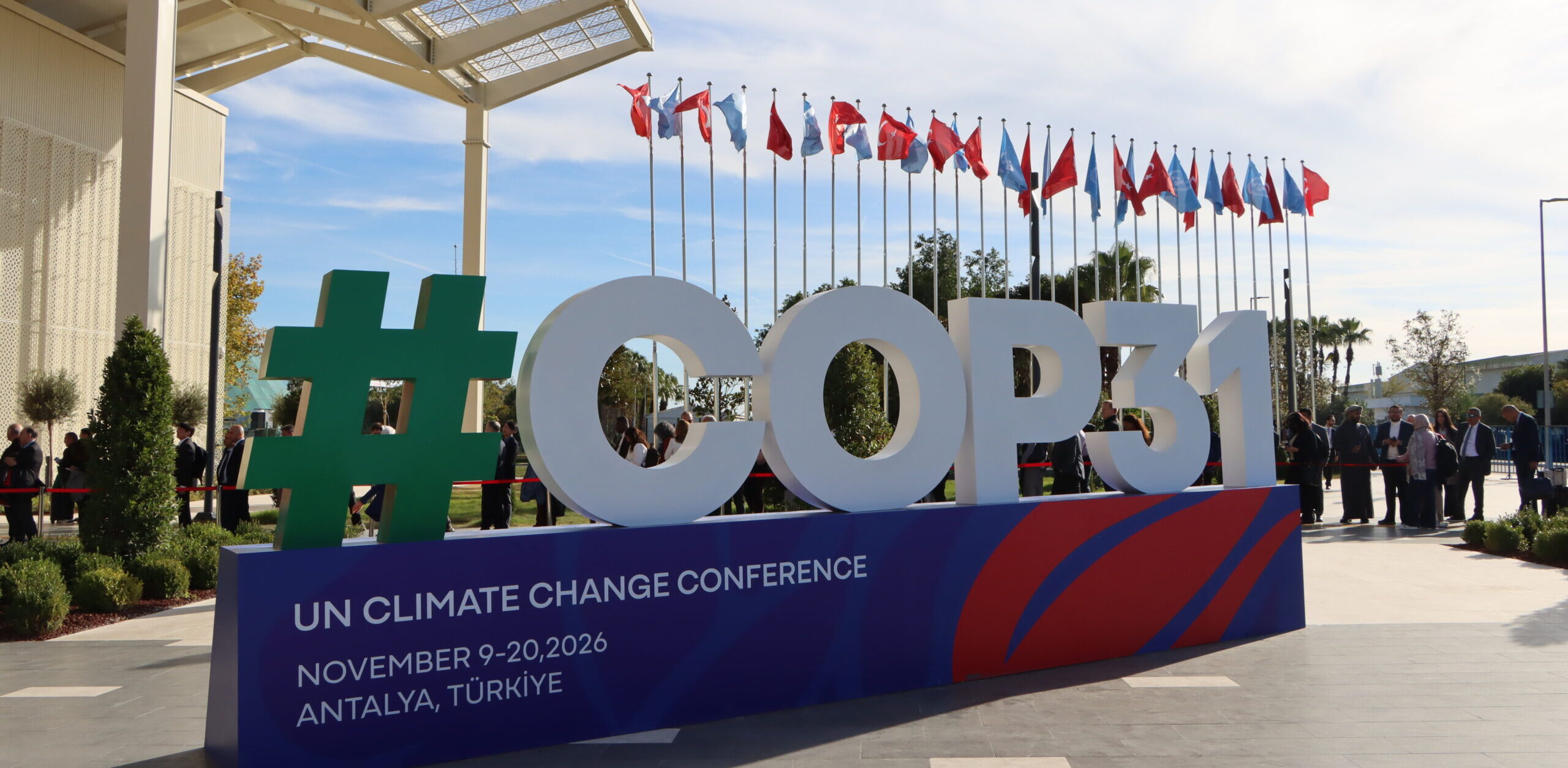
With global warming projected to temporarily exceed 1.5°C above pre-industrial levels, this year’s UNFCCC Conference of the Parties (COP31) in Antalya, Türkiye, pursued ambitious progress in an unprecedented format. While Türkiye hosted COP31, Australia’s Climate Change and Energy Minister Chris Bowen served as President of Negotiations, using the position to showcase its areas of leadership in renewable energy generation and amplifying Pacific voices in the global climate conversation.

Building on the Pacific Pre-COP events in Fiji and Tuvalu in October, Pacific partnership has remained central in the COP31 dialogue. As Pacific Ocean Envoy Hon. Inia Seruiratu emphasised, “we are not here to bring our vulnerabilities but to bring our solutions, to bring our leadership,” cementing the Pacific and broader Oceania region as a key player in the climate agenda.
The ‘implementation COP’
In his opening address, Australian Prime Minister Anthony Albanese emphasised the need for more investment in clean energy, faster electrification, stronger ocean action, and climate finance directed to those who need it most. To support this implementation, there were several productive announcements on these priorities. At a showcase for the Pacific Resilience Facility (PRF), Prime Minister Albanese called for further contributions to the Pacific-owned and led fund, which supports community-level adaptation and disaster preparedness, and Australia signed memoranda of understanding with both South Korea and Denmark to deepen bilateral cooperation on decarbonisation and clean energy.
Within the negotiating halls, the COP31 tagline of ‘Dialogue, Consensus, Action’ has been tested as Parties grapple with the wide-ranging risks of overshooting the 1.5°C threshold, as well as financing climate adaptation in this new reality. Outside the negotiations, a wide array of side events demonstrate the sheer amount of innovation and practical action happening at a local level that needs to be scaled. When this article was prepared on November 20th, negotiations were still under way. Draft texts had been released on several issues, including the cover decision, and parties were still working towards agreement on climate finance and the Global Goal on Adaptation.
Progress relies on greater multilevel governance
As focal point to the Local Governments and Municipal Authorities (LGMA) Constituency, ICLEI continued to represent and advocate for the role of subnational governments in the UNFCCC process.
The LGMA’s COP31 Position Paper was presented to Australia’s COP31 Presidency of Negotiations in week one, delivering six clear messages for the COP31 climate negotiations to help Parties support and collaborate with local and subnational governments. The Antalya Leaders’ Summit featured a high-level dialogue on urban resilience and adaptation. There were also renewed calls through CHAMP (Coalition for High Ambition Multilevel Partnerships) for stronger subnational partnerships. In the draft cover decision released on 19 November, paragraph 69 encourages national governments to work more closely with local and regional governments to implement climate action. Keeping that paragraph in was the LGMA’s top priority. The constituency also wants to retain support for locally led and ecosystem-based adaptation and to make explicit in paragraph 47 that subnational entities seeking direct access to climate finance can receive support to build capacity and prepare projects. For councils and communities across Oceania, those changes could help bring local priorities such as reliable water services and coastal resilience into national plans and investable decisions.
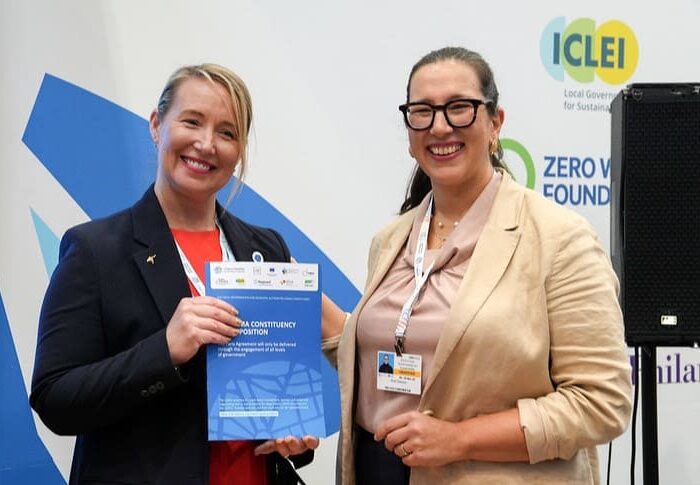
Ariel Dekovic, Focal Point for the LGMA Constituency hands over the LGMA Position Paper to Ingrid Lundberg, Branch Head, Office of the Presidency, Australian Government
Throughout COP31, the ICLEI Oceania team were on the ground in Antalya as the action unfolded.
The City of Newcastle flies the flag for Oceania cities
We were fortunate to be joined at COP31 by Cr Dr Elizabeth Adamczyk, ICLEI RexCom Chair and Councillor for the City of Newcastle, and Cr Declan Clausen, Newcastle’s Deputy Lord Mayor. Both spoke to the value of inter-city co-operation and exchange through global events such as COP.
Cr Dr Adamczyk attended as a Daring Cities Leader and representative of the Kaohsiung Community of Practice, on behalf of her city of Newcastle, which is a participating city in the Kaohsiung-ICLEI Community of Practice. At a session celebrating city leadership and collective impact, she explained why communities of practice matter at COP31:
“Local governments are implementing the actions needed to deliver the Paris Agreement, but no one city has all the answers. Peer exchange is what turns ‘best practice’ into ‘next practice’.”

Cr Clausen attended as both a councillor and Group Manager, Strategy and External Affairs at Hunter Water, as part of the Australian Water Delegation. Speaking in an ICLEI session on financing locally led urban water climate adaptation, he said the first step for cities tackling complex water projects should always be to find partners:
“Through the ICLEI network, there’s capacity to tap into and meet with other city governments, especially at a city scale. There’s nothing that others have not previously tackled… and there’s an abundance of goodwill to provide support and advice.”
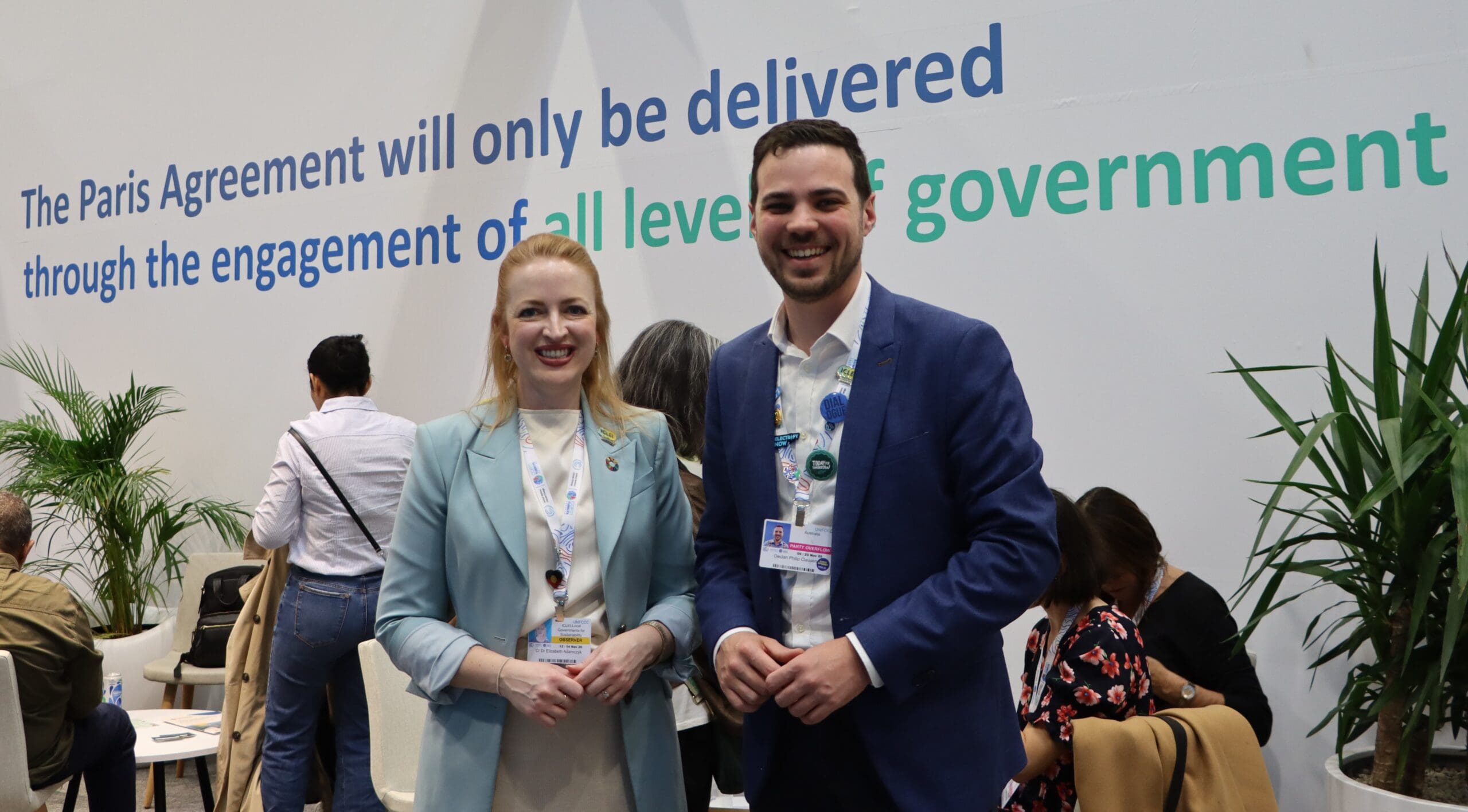
Cr Dr Elizabeth Adamczyk, ICLEI RexCom Chair and Councillor for the City of Newcastle, and Cr Declan Clausen, Deputy Lord Mayor of Newcastle at the Multilevel Action Pavilion at COP31
Showcasing zero waste innovation in the Pacific
Türkiye made zero waste a priority in its COP31 agenda. In a session co-hosted by ICLEI on Local Government Leadership for a Circular and Inclusive Economy towards Zero-Waste Cities, Eleanor Dewar, Professional Officer at ICLEI Oceania, presented on building resilient solar panel reuse and recycling systems in the Indo-Pacific. Through the BRISP project, the implementation of these systems could reduce the amount of solar panel waste going to landfill. The BRISP project is led by RMIT University, along with key partners, and funded by the Australian Government. ICLEI Oceania leads on components relating to municipal engagement in the Pacific. Speaking on the role of international partnerships in helping municipalities scale up their initiatives, Dewar noted that
“COP highlights to us the value of knowledge exchange, whether it’s through city networks, sister-city partnerships, inter-government MOUs, or research institute collaborations bridging policy and practice, all provide a basis for collective acceleration.”
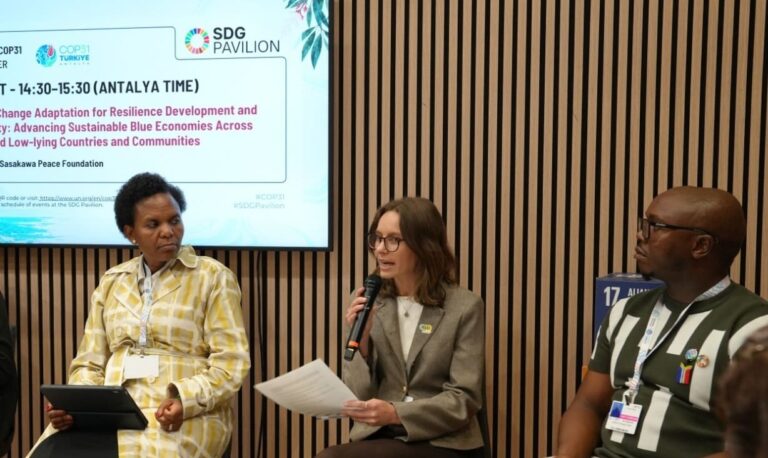
Eleanor Dewar speaking at a session on on Local Government Leadership for a Circular and Inclusive Economy towards Zero-Waste Cities
From Melbourne to Antalya: Melbourne’s Town Hall COP at COP31
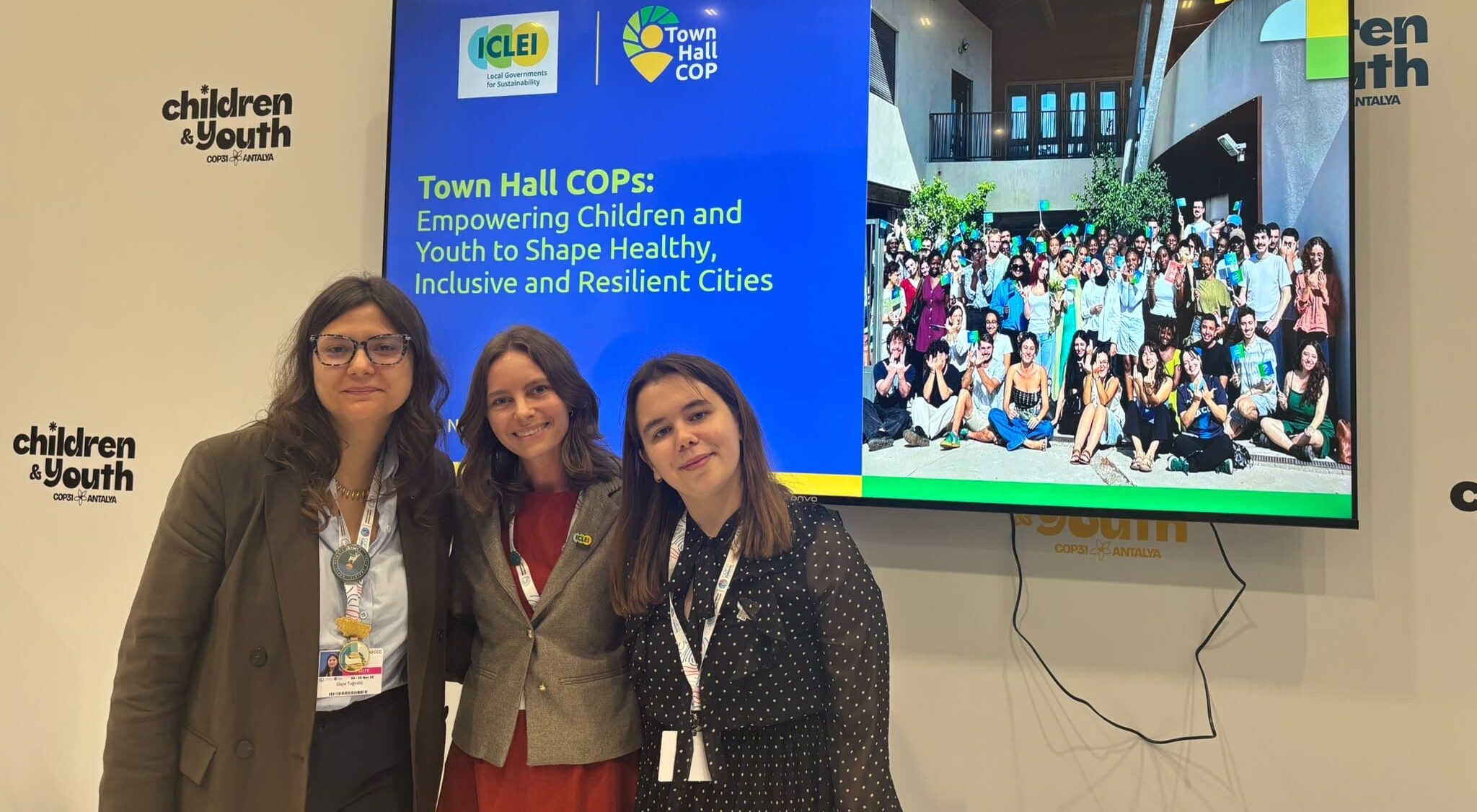
From left to right: Gaye Tuğrulöz, (Chair of the Board, Social Climate Association, Izmir), Eleanor Dewar (Professional Officer, ICLEI Oceania, Melbourne), and Pola Zabuska, (Advocacy Officer, ICLEI Europe, Bonn) share insights on Town Hall COPs for youth from cities around the globe
It was a privilege to bring the messages of hope from the recent Melbourne Town Hall COP to the global arena. The Melbourne Town Hall COP brought together more than 100 young people and was co-hosted by ICLEI Oceania, the City of Melbourne and the United Nations Association of Australia, Victoria Division.
The youths’ messages of hope for COP31 informed the LGMA Constituency’s official position alongside Town Hall COPs globally.
Further, the event featured as a case study in a session on “Empowering Children and Youth to Shape Healthy, Inclusive and Resilient Cities” during COP31’s Youth Day, and was shared through the Town Hall COP video screened at the Australia Pavilion and the Multilevel Action Pavilion.
Looking ahead
The true impact of COP31 will depend on how governments put climate commitments in practice. The gathering of Parties, countries, organisations, governments, experts and enthusiasts demonstrates a commitment to the multilateral system, one that remains imperfect but indispensable, and is strongest when local action and global ambition move together. ICLEI Oceania remains committed to supporting our network of local and regional governments, amplifying their leadership on the global stage, and working side by side to advance a resilient, sustainable future for the region.
Eleanor Dewar’s participation at COP31 was made possible with funding from the Australian Government through the COP31 Climate Conference Travel Support Program.